
Sickle cell disease: ANSM gives green light to the DREPAMIR clinical trial. Genethon, a key contributor to the development of the innovative lentiviral vector
The French National Agency for Medicines and Health Products Safety (ANSM) has authorized the start of the Phase I/II DREPAMIR clinical trial for gene therapy treatment of sickle cell disease, a genetic blood disorder that affects millions of patients worldwide.
The trial is led by Professor Marina Cavazzana (Institut Imagine / AP-HP / Inserm / Université Paris Cité), in collaboration with Dr. Anne Galy (ART-TG, Inserm / Université Paris Cité) and Mario Amendola’s team at Genethon.
Mario Amendola, PhD, Head of the Gene Editing Laboratory, has made a decisive contribution to the design of the bifunctional lentiviral vector used in this trial.
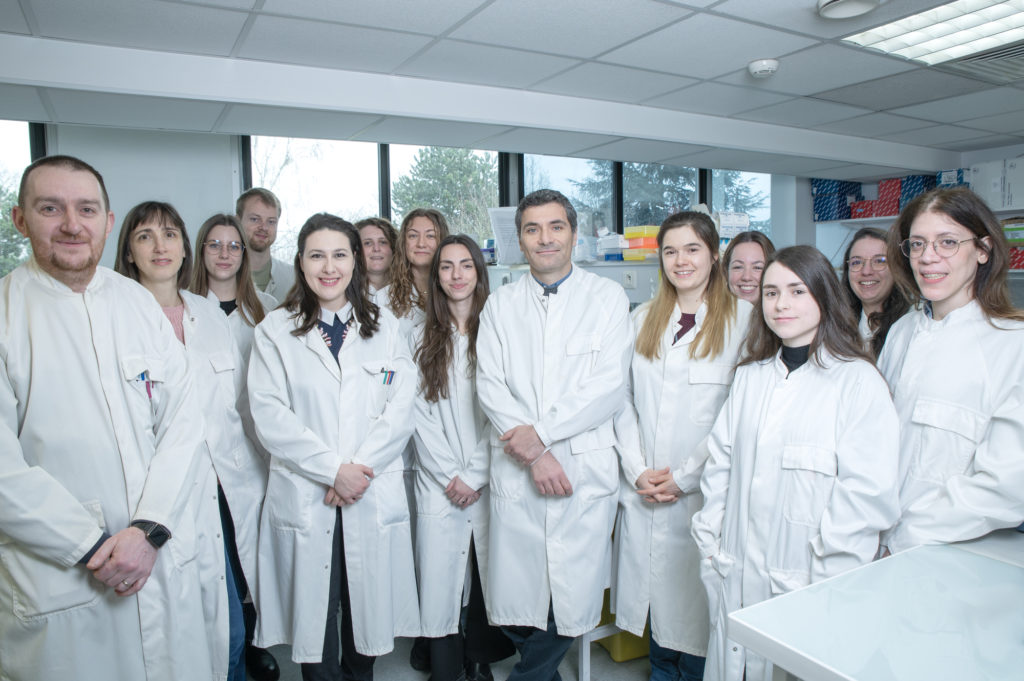
Working closely with the teams led by Annarita Miccio and Marina Cavazzana at the Imagine Institute, he optimized the integration of a microRNA, a key innovation that implements a dual strategy:
- stimulating the expression of a therapeutic β-globin,
- inhibit βS-globin, which causes the symptoms of sickle cell disease.
Thanks to his expertise, Mario Amendola has thus helped enhance the vector’s efficacy and optimize its construction, ensuring robust expression of the therapeutic gene.
This approach aims to introduce a therapeutic gene into the patient’s hematopoietic stem cells to produce functional red blood cells, while reducing the production of pathological hemoglobin.
“Contributing to the development of the vector used in DREPAMIR represents a major milestone for our teams. We have mobilized all our expertise in lentiviral vector engineering to design a candidate that is innovative, effective, and safe. Seeing this project enter the clinical phase is a great source of satisfaction and fully illustrates our mission: to transform cutting-edge research into concrete therapeutic solutions for patients. ” – Mario Amendola, PhD, Head of the Gene Editing Laboratory at Genethon.
The DREPAMIR trial aims to evaluate the ability of genetically modified hematopoietic stem cells to:
- sustainably improve the quality of life for patients with sickle cell disease.
- produce functional hemoglobin,
- reduce vaso-occlusive crises,
- prevent chronic complications,
Learn more
For more information on the DREPAMIR clinical trial:
https://lnkd.in/eXVF7DxN